
Indian benchmark indices, Sensex and Nifty, closed flat on Friday, with elevated crude oil prices due to geopolitical uncertainties and a rebound in US Treasury yields making investors cautious and preventing a decisive market rally.

Indian benchmark indices Sensex and Nifty experienced a significant slump in early trade, mirroring a bearish trend in global equities, as escalating conflict in West Asia drove up crude oil prices and intensified investor concerns.

The political confidence required to place high-end Japanese aircraft and personnel on Indian soil is itself a data point.
It indicates a level of trust that would have been difficult to imagine when India-Japan defence ties were largely symbolic, explains Varun Arya.

Indian benchmark indices Sensex and Nifty experienced declines in early trade, driven by a surge in Brent crude oil prices above USD 91 per barrel due to escalating tensions between Iran and the US, alongside an increase in US 10-year bond yields. Track Sensex, Nifty on August 18.

India is actively integrating payment system harmonisation into its Free Trade Agreement (FTA) negotiations, especially with countries hosting a large Indian diaspora. This strategy aims to leverage India's growing fintech ecosystem, facilitate cross-border financial services, and position India as a global hub for financial services exports, particularly through platforms like GIFT City.

'It's a changing world and the opening up doesn't mean that concerns with regards to security have gone away.'

Beijing clearly intends to extend the China-Myanmar Economic Corridor to Bangladesh as part of its larger Maritime Belt and Road Initiative to boost its Indian Ocean presence.

The income-tax department has launched a significant verification drive targeting 394 entities and 36 professionals over suspected irregularities in substantial foreign remittances made over the past three years, aiming to uncover potential tax evasion and fraudulent transactions.

The Indian government has issued an updated Standard Operating Procedure (SOP) for processing Foreign Direct Investment (FDI) applications, aiming to clear all proposals within 12 weeks, a two-week extension from the previous 10-week target, to ensure a fully paperless and transparent process.

'Value is not where you make money in India. It never has been.' 'You have to buy momentum.' 'Momentum is in technology, and I don't see that slowing down because I believe the AI infrastructure boom is going to last for a while.'

Indian benchmark indices closed mixed, with the Sensex gaining 113.61 points to 78,079.96 and the Nifty falling 40.10 points to 24,395.85, as elevated crude prices and ongoing geopolitical uncertainty in the Middle East made investors cautious.
Indian benchmark indices closed mixed, with the Sensex gaining 113.61 points to 78,079.96 and the Nifty falling 40.10 points to 24,395.85, as elevated crude prices and ongoing geopolitical uncertainty in the Middle East made investors cautious.

In April alone, they snapped up shares worth Rs 19,664 crore, recording their biggest buy since October 2024.

Subhash Chandra hoped that the lenders would discuss the matter with the borrowers, reconcile the outstanding accounts, and get paid by the borrowers.

Why would a country that requires close to $90 billion in net foreign capital annually to create jobs, build productive capacity, and sustain rapid growth permit $30 billion of capital to flow abroad, thereby contributing to pressure on the rupee? asks Debashis Basu.

Foreign universities are unlikely to gain major ground in India's higher education market in the near term, as students and families continue to prioritise return on investment over brand value in a highly price-sensitive sector.

Indian benchmark indices closed marginally higher, with the Sensex gaining over 43 points and the Nifty remaining flat, as a spike in crude oil prices due to geopolitical uncertainties tempered risk appetite.

Indian benchmark indices, Sensex and Nifty, experienced declines in early trade due to a significant spike in crude oil prices, driven by escalating geopolitical uncertainties, despite positive cues from Asian and US markets.

The Delhi High Court has quashed cases registered by the Delhi Police and the Enforcement Directorate against news portal NewsClick and its editor-in-chief Prabir Purkayastha, citing that the continuation of the FIR was 'a gross abuse of the process of law' and the investment was an economic decision that 'did not spell out any criminal offence'.

Foreign investors have largely been exiting one part of the market while domestic investors have been enthusiastically accumulating another, points out Debashis Basu.
The Nifty and Sensex outperformed Asian peers in South Korea, Japan, Taiwan and China.

The Indian rupee is highly vulnerable among Asian currencies, with Barclays and MUFG warning of a potential depreciation towards 100/$ if the West Asia conflict persists, driven by widening current account deficits and elevated crude oil prices.

Analysts predict that the Reserve Bank of India's interest rate decision, the evolving situation in West Asia involving the US-Iran conflict, and crude oil prices will be the primary factors influencing investor sentiment in the Indian stock market this week.

Indian benchmark indices Sensex and Nifty saw a significant rebound in early trade, driven by a sharp decline in crude oil prices and easing geopolitical tensions in the West Asia, which improved market sentiment and reduced inflation fears. Track Sensex, Nifty on July 27.

Cleaner balance sheets, regulatory support and strong growth prospects helped Indian private banks attract over $6 billion in foreign capital, with more deals expected in 2026.

A US federal judge has permanently dismissed the criminal securities-fraud case against Adani Group chairman Gautam Adani and his nephew Sagar, closing nearly two years of prosecution without a trial. Gautam Adani stated, "Truth has prevailed," in response to the ruling.

A think tank, GTRI, has urged India to resist US pressure regarding its UPI policies, advocating for the defence of competition, policy autonomy, and the long-term sustainability of its payments ecosystem. This comes as the Lok Sabha passed a bill allowing charges on UPI transactions, a move GTRI suggests should not be influenced by foreign trade complaints.

'Once you're wrestling with making a merger of that scale value-accretive, you're also under pressure to keep growing the balance sheet and chasing liabilities, and other things start to slip as a consequence.'

FPIs have already withdrawn Rs 2.6 trillion from Indian equities in 2026, exceeding the outflows recorded in any previous full calendar year.

The post-Covid euphoria surrounding direct equity investing has ebbed in 2025. Individual investors have turned net sellers in the domestic equity market, pulling out about 8,461 crore so far this year - a sharp reversal from the record purchases seen in 2024, according to a report by the National Stock Exchange of India (NSE).

Insights from behavioural economics suggest that an ambitious nudge can be effective if three conditions are met, points out Ram Singh Insights from behavioural economics suggest that an ambitious nudge can be effective if three conditions are met, points out Ram Singh, director, Delhi School of Economics.

NSE's draft prospectus discloses a legal dispute over 5,000 shares allegedly transferred by mistake into an individual investor's demat account.

A think tank, GTRI, has urged India to resist US pressure regarding its UPI policies, advocating for competition, policy autonomy, and a sustainable payments ecosystem. This comes as the Lok Sabha passed a bill allowing charges on UPI, and the US has criticised India's digital payment systems, raising concerns about the future of India's digital payment landscape.
FDI inflows into India are expected to register robust growth in 2026, supported by strong macroeconomic fundamentals, big-ticket investment announcements, sustained efforts to improve the ease of doing business, and a new generation of investment-linked trade pacts.
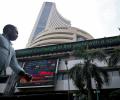
Indian benchmark indices, Sensex and Nifty, saw early gains, primarily driven by IT stocks, amidst expectations of a less aggressive monetary policy from the US Federal Reserve following softer inflation data. Global market trends and upcoming Q1 results are also influencing investor sentiment. Track Sensex, Nifty on july 16.

'The prohibition regime has been accompanied by concerns regarding the expansion of the illicit liquor trade, increased enforcement challenges and corruption, and the growing use of alternative intoxicants, including illicit drugs.'

India's securitisation market achieved its highest-ever first-quarter performance, reaching approximately 60,000 crore, a 22 per cent year-on-year increase, primarily driven by Non-banking financial companies (NBFCs) and a significant surge in gold loan securitisation.

State-owned enterprises in India are projected to significantly increase their overseas borrowings, potentially exceeding $15 billion in FY27, driven by the Reserve Bank of India's new concessional forex swap facility which offers a 3 per cent funding-cost advantage.

A sophisticated cross-bank syndicate is systematically defrauding non-resident Indians (NRIs) and elderly citizens by exploiting their fixed deposits through forged documents and fictitious loans, often involving colluding bank employees and real estate deals.

But selectively, with regulatory scrutiny and special approval, points out Tamal Bandyopadhyay.
